Pengaruh Inflasi terhadap Konsumsi Rumah Tangga di Indonesia
DOI:
https://doi.org/10.61132/moneter.v3i3.1581Keywords:
Basic needs, Household consumption, Inflation, Islamic microeconomicsAbstract
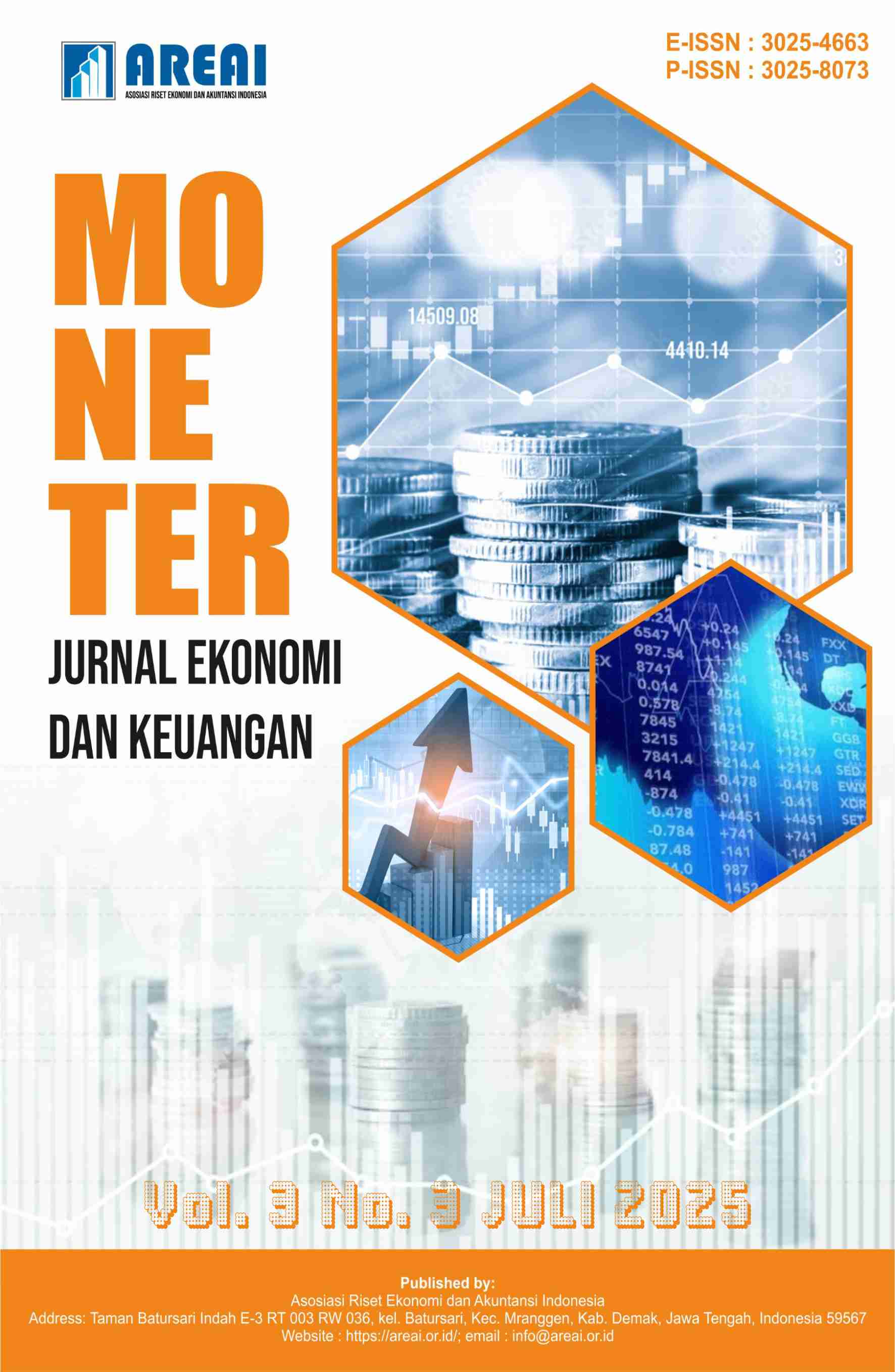
The purpose of this study is to identify and analyze the effects of inflation on household consumption in Indonesia. Thus, the focus on the dynamics of people's spending is based on basic needs and non-smoking. This study uses a descriptive qualitative approach enhanced by secondary data from macroeconomic literature and primary data in the form of national statistical reports published by the Central Bureau of Statistics (BPS). This analysis is carried out based on the concept of Keynes' consumption theory, Friedman's permanent income hypothesis, and Modigliani's life cycle theory. The results show that increasing inflation has a significant impact on lower household consumption. In particular, the low group with moderate sorting shows a large allocation of income for basic needs. Groups with higher incomes through alternative strategies or delayed consumption tend to be more adaptable. These results suggest that price control policies and social security networks are strengthened as an effort to maintain consumption stability in the budget. This summary includes the background, objectives, methods, results, and conclusions related to explaining the actual conditions and political impacts of the relationship between Indonesian inflation and household consumption.
Downloads
References
Almaya, U. N., Riyanto, W. H., & Hadi, S. (2021). Pengaruh harga minyak dunia, inflasi, konsumsi rumah tangga terhadap pertumbuhan ekonomi Indonesia. https://doi.org/10.22219/jie.v5i2.14101
Badan Pusat Statistik. (2023). Indeks Harga Konsumen dan Inflasi Bulanan Indonesia, 2006–2023. Diakses Oktober 2024, dari https://www.bps.go.id
Craven, I. (Ed.). (2021). Sinema Australia pada tahun 1990-an. Frank Cass.
Dewia, S. P. D., Fasa, M. I., & Suharto. (2021). Investasi dan inflasi sebagai instrumen pertumbuhan ekonomi di Indonesia dalam perspektif ekonomi Islam. Journal of Islamic Economics, 3(2), 17–28.
Hirotsu, H. (2017). Analisis varians tingkat lanjut [E-book]. John Wiley & Sons. https://doi.org/10.1002/9781119303374
Kamaludin, A., & Fitriani, R. (2022). Analisis konsumsi rumah tangga dalam perspektif ekonomi Islam. Jurnal Ekonomi Syariah Terapan, 6(1), 11–22. https://doi.org/10.32493/jes.v6i1.2022
Kumoro Ningsih, B., Juliprijanto, W., & Jalunggono, G. (2020). Analisis pengaruh pendapatan per kapita, inflasi, tingkat simpanan, dan nilai tukar terhadap konsumsi masyarakat di Indonesia tahun 2000–2018. Dinamic: Directory Journal of Economic, 2(1). https://doi.org/10.231002/dinamic.v2i1.1365
Rachman, A. (2023). Kebutuhan dasar dalam ekonomi Islam: Konsep dan aplikasi. Jurnal Ekonomi Islam Kontemporer, 5(2), 45–60. https://doi.org/10.20473/jeik.v5i2.2023
Shofia, A., & Iqbal, I. (2024). Inflasi dalam perspektif Islam. Jurnal Ekonomi Islam, 1(8), 27–36.
Yuliana, D., & Hidayat, M. (2021). Pengantar mikroekonomi Islam: Pendekatan teoritis dan praktis. Jurnal Ilmu Ekonomi Islam, 3(3), 100–114. https://doi.org/10.12345/jiei.v3i3.2021
Downloads
Published
How to Cite
Issue
Section
License
Copyright (c) 2025 Moneter : Jurnal Ekonomi dan Keuangan

This work is licensed under a Creative Commons Attribution-ShareAlike 4.0 International License.